Headstand Yoga Benefits: Physical, Mental & Safety Guide
Explore headstand yoga benefits for strength, balance, and focus. Understand potential risks, preparation techniques, and safer alternatives.
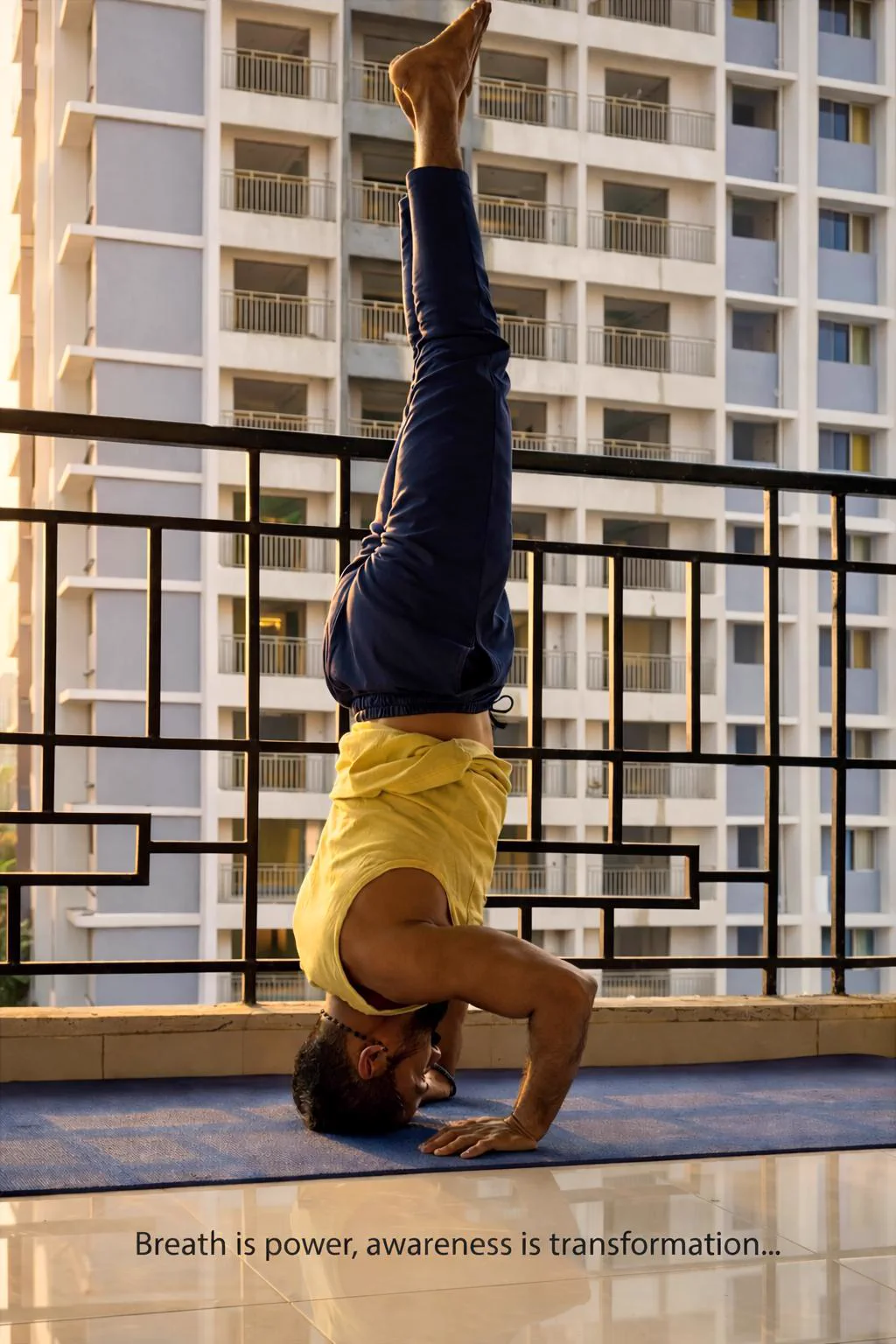
Headstand Benefits: Physical and Mental Health, Safety and Practice
Headstand, known in Sanskrit as Sirsasana, is an advanced yoga inversion that challenges balance, coordination, body awareness, and concentration. Many practitioners value the posture for the attention it demands, but its benefits depend on appropriate preparation and sound technique.
A headstand is not necessary for a complete yoga practice, and it is not suitable for everyone. If your goal is to develop strength and control before attempting an inversion, begin with foundational exercises and learn from a qualified yoga instructor.
What Is Headstand (Sirsasana)?
Headstand is a yoga posture in which the practitioner balances upside down with support from the forearms and head, depending on the variation being taught. It requires coordinated work from the shoulders, trunk, and other muscles that help maintain a controlled position.
The posture is sometimes called the king of yoga poses, but that traditional description should not be confused with evidence that it is medically superior to other forms of exercise.
You can develop strength, balance, and concentration through many lower-risk yoga practices.
Watch this yoga video on NomadLifeXP.
Physical Benefits of Headstand
1. Balance and body awareness
Maintaining an inversion requires careful awareness of body position. Practitioners must notice how their torso, hips, and legs align and how small movements affect balance.
These demands can make Headstand an opportunity to practise coordination. However, the degree of benefit varies with experience, technique, and the rest of a person's exercise routine.
2. Upper-body and core control
A controlled Headstand requires active shoulder and trunk engagement. Practising appropriate preparatory exercises can help develop the strength and coordination needed for more advanced yoga movements.
The neck should not be treated as the primary weight-bearing structure. Because pressure on the head and neck can cause serious injury, do not attempt to force yourself into the posture or continue when alignment becomes unstable.
3. Coordination and controlled movement
Entering and leaving an inversion slowly requires planning and control. Learning to move deliberately, rather than kicking up or dropping out of the pose, can reinforce movement awareness.
You can practise these skills with simpler balance exercises before considering a headstand.
4. Posture awareness
Yoga can help practitioners pay closer attention to alignment and movement. Headstand is one possible way to explore body awareness, but it is not a proven shortcut to better everyday posture.
For many people, a balanced routine of strength training, mobility work, and appropriate yoga poses is a more practical starting point.
Mental Benefits of Headstand
1. Concentration and attention
Balancing in an unfamiliar position demands attention. Practitioners need to monitor their movements, maintain control, and respond to changes in balance.
This can make the pose an engaging concentration exercise. It does not mean that Headstand has been shown to improve attention in everyone or that inversion is required to develop focus.
2. Patience and self-awareness
Learning an advanced posture takes time. Recognising when to stop, return to an easier variation, or ask for help is part of practising responsibly.
These decisions can encourage patience and a more realistic awareness of personal limits. The same skills can also be developed through meditation, breathing exercises, and other forms of yoga.
3. Mindful breathing
Calm, comfortable breathing can help you notice tension and avoid rushing through a movement. Never hold your breath or strain to maintain an inversion.
If you feel dizzy, breathless, unwell, or unusually pressured, exit the practice safely with appropriate assistance.
Does Headstand Improve Blood Flow to the Brain?
An inverted position changes the body's relationship to gravity, but that does not establish that Headstand improves brain function, oxygen delivery, or long-term health. The body regulates circulation through several mechanisms, and simple claims that blood automatically flows more freely to the brain are misleading.
Do not use Headstand to treat a medical condition or as a substitute for medical care.
How to Prepare for Headstand
Headstand is an advanced posture, not a beginner's starting point. Build a foundation before attempting it.
1. Develop shoulder and trunk control
Practise suitable shoulder-strengthening movements, controlled plank variations, and other exercises recommended by your instructor. The goal is to maintain stability without straining the neck.
2. Learn the setup with an instructor
Ask a qualified yoga instructor to demonstrate the specific Headstand variation you are learning. Different teaching methods use different setups, so avoid mixing instructions from unrelated techniques.
An instructor should help you understand the placement of your arms, the role of your shoulders, and how to exit without collapsing.
3. Practise easier alternatives first
You can work on balance, core control, and mindful movement without going upside down. Depending on your abilities, an instructor may recommend supported variations or other poses that develop similar skills with less risk.
A wall does not eliminate the risks of Headstand, and it should not be treated as a substitute for instruction.
4. Learn how to exit safely
Before attempting an inversion, understand how to come out of the position under supervision. Do not kick up repeatedly, force your legs overhead, or continue when you cannot maintain control.
Stop if you experience neck discomfort, pain, dizziness, visual changes, or other concerning symptoms.
Common Headstand Mistakes
Putting too much pressure on the neck
Incorrect positioning or loss of control can place dangerous loads on the head and neck. Do not assume that a soft mat makes this safe. Learn appropriate weight distribution from a qualified instructor.
Kicking up with momentum
Using momentum to throw the legs overhead can make the entry difficult to control and increase the risk of falling. Build the necessary strength and coordination before attempting the full posture.
Holding the pose for too long
Longer holds are not automatically better. Do not chase a duration, compare yourself with other practitioners, or continue when your technique deteriorates.
Ignoring warning signs
Pain, dizziness, visual disturbances, numbness, or unusual discomfort are reasons to stop. Do not try to push through symptoms to complete a pose.
Practising alone before you are ready
Videos and written instructions cannot assess your alignment or respond if you lose control. Seek qualified, in-person guidance before attempting an advanced inversion.
Headstand Safety: Who Should Avoid It?
Headstand can place substantial stress on the neck and may be inappropriate for people with certain medical conditions. The risks depend on the individual and the specific posture.
Seek advice from a qualified healthcare professional before considering Headstand if you have a history of neck or spinal problems, glaucoma or other eye conditions affected by pressure, uncontrolled high blood pressure, cardiovascular disease, balance problems, or a condition that may make inversion unsafe.
Pregnancy, recent surgery, and other medical circumstances may also require avoiding the pose or obtaining individual clinical guidance.
Do not practise Headstand if you have been advised to avoid inversions. A wall, cushion, or modified setup does not automatically make the posture safe.
If you are new to yoga, begin with accessible poses and work with a qualified instructor rather than attempting a headstand independently.
Safer Alternatives to Headstand
You don't need to balance upside down on your head to experience many of yoga's benefits. Several accessible poses can help you develop strength, improve flexibility, calm your mind, and build body awareness without placing the same amount of pressure on your head and neck.
Choose poses that match your experience and comfort level. Move slowly, breathe naturally, and stop if you experience pain, dizziness, or unusual discomfort.
1. Dolphin Pose (Ardha Pincha Mayurasana)
Dolphin Pose develops shoulder stability and upper-body strength without requiring you to balance on your head.
Benefits:
- Strengthens the shoulders, arms, and upper back.
- Engages the core and improves body awareness.
- Stretches the hamstrings and calves.
- Helps prepare the body for more advanced yoga poses.
How to practice: Start on your hands and knees. Lower your forearms to the mat, tuck your toes, and lift your hips toward the ceiling. Keep your spine long and bend your knees if needed. Hold for three to five comfortable breaths.
Safety tip: Keep your neck relaxed and avoid forcing your shoulders or spine into an uncomfortable position.
2. Rabbit Pose (Sasangasana)
Rabbit Pose combines a gentle forward bend with a stretch through the back and shoulders. However, it can place pressure on the head and neck, so it is not suitable for everyone.
Benefits:
- Stretches the back and shoulders.
- Encourages mindful breathing and body awareness.
- Offers an opportunity to slow down and focus inward.
How to practice: Begin in Child's Pose. If comfortable, reach back toward your heels and gently round your spine. Keep the movement controlled and avoid putting significant weight on the crown of your head.
Safety tip: Avoid Rabbit Pose if you have neck pain, cervical spine problems, or discomfort from pressure on your head. Choose Child's Pose instead for a gentler alternative.
3. Downward-Facing Dog (Adho Mukha Svanasana)
Downward-Facing Dog is a foundational yoga pose that combines a mild inversion with a full-body stretch without requiring a headstand.
Benefits:
- Strengthens the arms and shoulders.
- Stretches the hamstrings, calves, and back.
- Encourages steady breathing and concentration.
- Builds coordination and whole-body awareness.
How to practice: Start on your hands and knees. Spread your fingers, tuck your toes, and lift your hips up and back. Keep your spine long and bend your knees as needed. Allow your head to relax between your upper arms.
Safety tip: Avoid forcing your heels toward the floor. Modify the pose if it causes wrist or shoulder pain.
4. Standing Forward Fold (Uttanasana or Wide-Legged Prasarita Padottanasana)
Standing Forward Fold and Wide-Legged Forward Fold offer accessible ways to stretch the back of the body and practice mindful breathing.
Benefits:
- Stretches the hamstrings, calves, and back.
- Encourages relaxation through controlled breathing.
- Helps improve flexibility and body awareness.
How to practice: For Uttanasana, stand with your feet hip-width apart and hinge forward from your hips. Bend your knees as needed and rest your hands on yoga blocks or your legs. For Prasarita Padottanasana, widen your stance and fold forward from your hips while keeping your spine comfortable.
Safety tip: Bend your knees if your hamstrings feel tight. Rise slowly to reduce the risk of dizziness, and avoid deep forward folds if they aggravate a back problem.
5. Legs-Up-the-Wall Pose (Viparita Karani)
Legs-Up-the-Wall is a restorative pose in which you lie on your back with your legs supported by a wall. It offers a relaxing alternative to more demanding inversions without balancing on your head.
Benefits:
- Encourages relaxation and slow breathing.
- Provides a restful position after physical activity.
- Offers an accessible option for winding down at the end of the day.
How to practice: Sit sideways beside a wall, then gently turn onto your back and extend your legs upward along the wall. Keep your hips at a comfortable distance from the wall and relax your arms by your sides. Stay for one to five minutes if comfortable.
Safety tip: Exit slowly by bending your knees and rolling onto your side. Seek medical guidance if this position may aggravate a health condition, including glaucoma or a condition affected by changes in body position.
Which Alternative Should You Choose?
- For shoulder and core strength: Dolphin Pose.
- For a gentle back stretch: Child's Pose, or Rabbit Pose if your neck tolerates it comfortably.
- For a full-body stretch: Downward-Facing Dog.
- For hamstring flexibility: Standing Forward Fold or Wide-Legged Forward Fold.
- For relaxation: Legs-Up-the-Wall Pose.
You can build a balanced yoga practice without making headstands your goal. Consistency, good technique, comfortable breathing, and respect for your body's limits matter more than achieving an advanced inversion.
Frequently Asked Questions About Headstand Benefits
What are the main benefits of Headstand?
Headstand challenges balance, coordination, body awareness, and concentration. The experience varies between practitioners, and claims about special medical or cognitive benefits should not be assumed without reliable evidence.
Is Headstand good for beginners?
Headstand is an advanced posture and is generally not a suitable pose for beginners to attempt independently. Beginners can develop strength, balance, and focus through simpler yoga poses and guided instruction.
Does Headstand improve memory or concentration?
The posture requires attention while it is being performed, but this does not prove that practising Headstand improves memory or long-term concentration. Other practices, including meditation and regular exercise, may support broader wellbeing without requiring an inversion.
Does Headstand improve digestion?
There is not enough reliable evidence to recommend Headstand as a way to improve digestion. Do not use the posture to treat digestive symptoms or replace medical advice.
How long should you hold a Headstand?
There is no universally appropriate duration. Safety, individual ability, and the instructor's guidance matter more than holding the pose for a particular number of seconds or minutes. Beginners should not attempt timed headstands on their own.
Can Headstand cause injury?
Yes. Falls and excessive or poorly controlled loading can cause serious injuries, including injuries involving the neck. Proper preparation and instruction reduce some risks but cannot eliminate them.
Are there alternatives to Headstand?
Yes. Suitable balance exercises, foundational yoga poses, and instructor-guided strength work can develop coordination and body awareness without requiring a full inversion. Choose alternatives appropriate to your experience and health.
Build Your Yoga Practice Step by Step
Headstand can be a demanding way to explore balance, concentration, and body awareness, but it is not a measure of your ability as a yoga practitioner. Progress means learning sound technique, recognising your limits, and choosing a level of challenge appropriate for you.
If you are developing the strength and focus needed for more advanced poses, read our guide to Forearm Stand Yoga for Focus and Confidence.
You may also explore our guides to forward-bending yoga for flexibility and relaxation and mental clarity and overcoming overthinking.
Consistency matters more than intensity. Practise with patience, prioritise safety, and remember that the purpose of yoga is not to master the most difficult pose, but to develop a sustainable relationship with movement and awareness.
Related Articles
Forearm Stand Yoga: Focus, Strength and Confidence
Explore how forearm stand yoga develops balance, body awareness, focus, and confidence. Learn about preparation, technique, and mindful practice.
It's Never Too Late: Forward Bending Yoga
Explore how forward bending yoga supports flexibility, mobility, relaxation, and body awareness. Discover gentle ways to develop a calmer mind.
Mental Clarity: How to Stop Overthinking and Improve Focus
Learn practical ways to stop overthinking, sharpen your focus, quiet mental noise, and regain control of your attention through simple daily habits.
Self-Discipline Guide: Reclaim Your Attention, Rebuild Your Life
Learn how to build self-discipline, overcome procrastination, improve focus, and develop lasting habits with practical strategies and a seven-day reset.
You Are Not Stuck: Break Familiar Patterns and Grow
Feel stuck in life? Discover how familiar patterns shape your thinking and learn to challenge old habits, gain perspective, and create meaningful change.