It’s Never Too Late to Transform Your Body and Mind with Forward Bending Yoga
Discover how gentle forward bending yoga can support flexibility, mobility, relaxation, body awareness, and a calmer mind without requiring extreme flexibility.
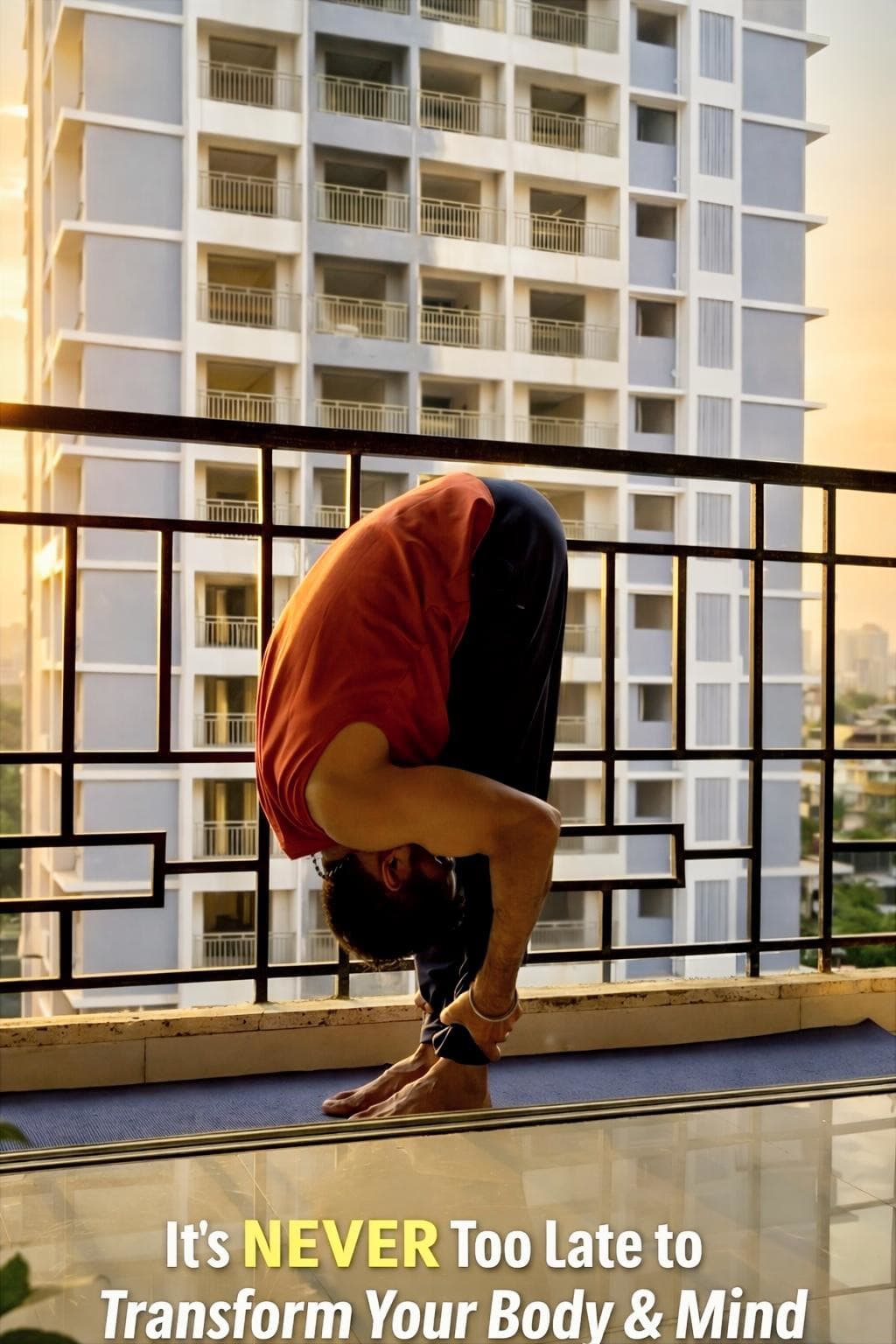
It’s Never Too Late to Transform Your Body and Mind with Forward Bending Yoga
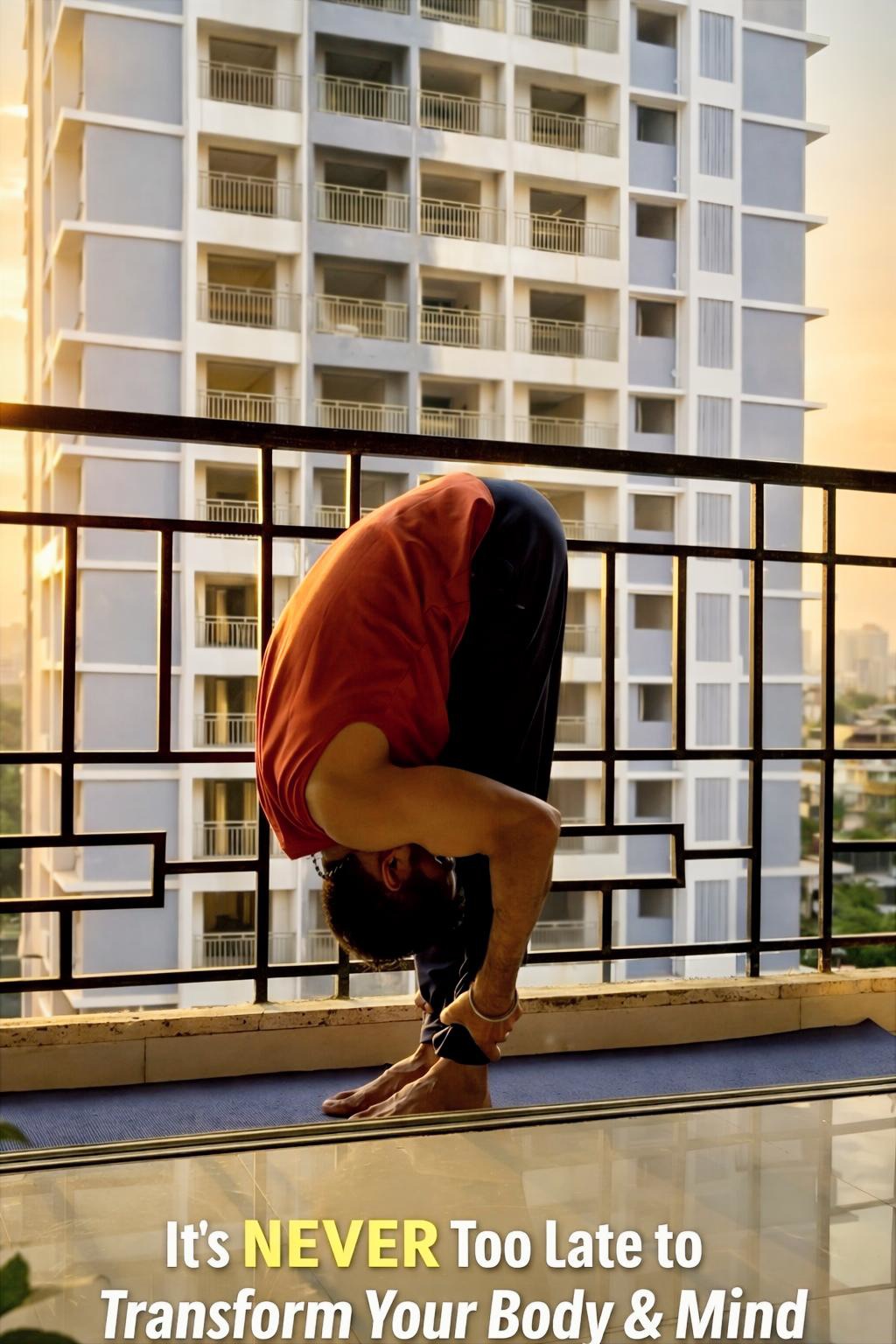
What if one of the simplest yoga movements could become one of the most useful parts of your day?
You do not need to master an advanced pose. You do not need exceptional flexibility. You do not need a long yoga session or an expensive studio membership.
Sometimes, you simply need to slow down.
Forward bending yoga offers a simple way to reconnect with your body, pay attention to your breathing, and create a quiet pause in an otherwise busy day. A gentle forward fold can stretch the back of the body, encourage mindful movement, and give you a few moments away from constant stimulation.
That does not mean a forward bend is a cure for stress, anxiety, or emotional problems. Yoga is not a replacement for professional medical or mental health care.
Its value can be much simpler.
You pause.
You breathe.
You notice.
And you begin again.
For many people, that is a meaningful place to start.
What Is Forward Bending Yoga?
Forward bending yoga describes a group of yoga poses where the torso moves toward the legs or the floor.
Some forward bends are performed while standing. Others are practiced while seated or from a resting position.
Common forward bending yoga poses include:
- Standing Forward Fold, or Uttanasana
- Half Forward Fold, or Ardha Uttanasana
- Seated Forward Fold, or Paschimottanasana
- Head to Knee Pose, or Janu Sirsasana
- Child’s Pose, or Balasana
Although these poses have different shapes, they can all encourage a similar quality of attention.
You turn inward.
Instead of thinking about how your body looks from the outside, you start noticing how it feels from the inside.
That change in attention is one of the most valuable parts of a mindful yoga practice.
Why Forward Bending Can Feel So Calming
Stress does not always disappear when the stressful situation ends.
After a demanding day, you may still notice tight shoulders, a clenched jaw, shallow breathing, or stiffness from sitting for hours.
A gentle forward fold gives you a chance to interrupt that pattern.
You are no longer rushing from one task to another.
You are standing still.
Your breathing becomes something you can actually notice.
Your attention moves toward physical sensations.
And for a few moments, there is nothing you need to accomplish.
This does not mean that forward bending literally removes stored emotions from the muscles. That popular description is better understood as a way of talking about the connection between physical tension, attention, breathing, and emotional experience.
A mindful movement practice can give you an opportunity to become more aware of those experiences.
That awareness is useful on its own.
Forward Bending Yoga Is Not About Touching Your Toes
One of the biggest misconceptions about forward folds is that the pose only counts when your hands reach the floor.
They do not.
Your body has its own structure, history, mobility, and starting point.
Someone who sits for eight hours a day may experience a forward fold very differently from someone who regularly practices yoga.
Someone with naturally tight hamstrings may need to bend their knees.
Someone with greater hip mobility may fold farther without effort.
Neither person is doing the pose more correctly.
The purpose is not to create the deepest possible shape.
The purpose is to explore a comfortable range of movement while staying aware.
If bending your knees allows you to breathe more naturally and relax unnecessary tension, then bending your knees is a useful modification.
Yoga becomes more sustainable when you stop treating your body as something that needs to be forced into a particular shape.
How Forward Folds Connect Movement and Breathing
Breathing can turn a simple stretch into a more mindful practice.
Try approaching a forward fold without trying to make it deeper.
Start by standing comfortably.
Take a slow, easy breath in.
As you breathe out, hinge gently at your hips and allow your upper body to move forward.
Keep your knees soft.
Let your hands rest wherever they naturally reach.
Then breathe normally.
Notice your shoulders.
Notice your jaw.
Notice the sensation through your legs and back.
Most importantly, notice whether your breathing remains comfortable.
If you have to hold your breath to maintain the position, reduce the intensity.
The goal is not to endure the pose.
The goal is to remain present inside it.
Forward Bending Yoga Benefits
Regular yoga practice can support physical and mental wellbeing in several ways, and forward folds can be a useful part of that practice.
The effects are usually gradual rather than dramatic.
1. Supports Flexibility
Forward folds can gently lengthen the back of the legs and encourage comfortable movement through the hips.
If your hamstrings feel tight, the movement may initially feel limited.
That is normal.
You do not need to force flexibility.
With consistent and appropriate practice, your comfortable range of movement may improve over time.
2. Encourages Mobility
Flexibility and mobility are related, but they are not identical.
Mobility is about how comfortably and effectively you can move through a range of motion.
A balanced yoga practice can include forward folds alongside other movements that involve the hips, spine, shoulders, and legs.
This can be particularly useful if much of your day involves sitting.
A short movement break can be more practical than waiting for the perfect one hour workout.
3. Promotes Body Awareness
This may be one of the most overlooked benefits of yoga.
During a forward fold, you have an opportunity to notice what is happening in your body.
Is one side tighter?
Are your shoulders unnecessarily tense?
Are you holding your breath?
Are you pushing because you think you should go farther?
These observations can help you understand your body instead of simply judging it.
4. Creates a Pause From Mental Overload
Modern life encourages constant attention switching.
Messages.
Emails.
Notifications.
Meetings.
News.
Social media.
A few quiet minutes on a yoga mat can provide a different experience.
There is one movement.
One breath.
One physical sensation to notice.
That simplicity can make a short forward bending yoga routine feel surprisingly restorative.
5. Supports Relaxation
Slow movement and comfortable breathing can be incorporated into relaxation practices.
Rather than treating a forward fold as an intense stretch, try approaching it as a transition from activity toward stillness.
You may find it especially useful at the end of a workday or as part of a gentle evening yoga routine.
Three Simple Forward Bending Yoga Poses for Beginners
If you are new to yoga, these poses offer approachable starting points.
Standing Forward Fold
Stand with your feet approximately hip width apart.
Keep your knees slightly bent.
Take a comfortable breath in.
As you breathe out, hinge gently at your hips and allow your torso to move forward.
Your hands can rest on your thighs, shins, yoga blocks, or the floor.
Do not worry about reaching your toes.
Allow your neck to stay relaxed.
Take several comfortable breaths.
When you are ready to come out, bend your knees slightly more and slowly return to standing.
Moving slowly on the way back up helps you stay aware of your balance and body position.
Seated Forward Fold
Sit with your legs extended in front of you.
If your hamstrings feel very tight, keep your knees slightly bent.
Begin by sitting as comfortably upright as possible.
Then hinge forward from your hips without forcing yourself toward your feet.
Your hands can rest on your legs.
You can also use a yoga strap or place a cushion beneath your hips if that makes the position more comfortable.
Stay for a few easy breaths.
Remember that the goal is not to create the deepest possible stretch.
The goal is comfortable, attentive movement.
Child’s Pose
Child’s Pose is often used as a resting posture in yoga.
Start from a kneeling position and gently move your hips toward your heels as far as comfortable.
Fold your torso forward.
Your forehead can rest on the floor, a cushion, or a yoga block.
Your arms can extend forward or rest alongside your body.
If the traditional position feels uncomfortable, change it.
Widen your knees.
Add support.
Raise your hips slightly.
Or choose another resting position.
A yoga practice should adapt to your body rather than requiring your body to adapt to an idealized image of the pose.
A Simple Five Minute Forward Bending Yoga Routine
You do not need a complicated sequence to begin.
Try this gentle five minute practice:
- Minute 1: Stand comfortably and take several slow, natural breaths.
- Minute 2: Practice a gentle Half Forward Fold, keeping your knees soft.
- Minute 3: Move into Standing Forward Fold and stay for several comfortable breaths.
- Minute 4: Sit down and explore a gentle Seated Forward Fold.
- Minute 5: Finish in Child’s Pose or another comfortable resting position.
The point is not to see how far you can fold.
Instead, ask yourself:
Do I feel more aware of my body than I did five minutes ago?
That question is often more useful than measuring flexibility.
Forward Bending Yoga for Stress Relief
If stress is the reason you are interested in forward folds, keep your expectations realistic.
A yoga pose cannot solve every source of stress in your life.
It cannot replace sleep, healthy relationships, professional support, or practical changes when those things are needed.
But a short movement practice can give you a deliberate pause.
That pause can matter.
Imagine finishing a long day feeling mentally scattered.
Instead of immediately reaching for your phone, you spend five minutes moving slowly.
You fold forward.
You breathe.
You notice how your shoulders feel.
You return to standing.
Nothing outside you has necessarily changed.
But you have created a small space between the stressful day and whatever comes next.
That is where a sustainable yoga practice can become valuable.
Forward Bending Yoga for Beginners: Start Where You Are
If you have never practiced yoga before, resist the temptation to begin with an advanced routine.
Start with movements you can understand.
Start with a few minutes.
Start with a version of the pose that allows you to breathe comfortably.
Your first goal is not flexibility.
It is familiarity.
As you practice, you may begin to notice changes in how your body moves and how quickly you recognize tension.
You may also become more comfortable slowing down.
That is real progress.
For a practice that develops a different combination of balance, concentration, and strength, explore our guide to Forearm Stand Yoga for Focus and Confidence.
If you are interested in more advanced inversions, read our guide to Headstand Benefits, Body, Mind, and Safety before treating a headstand as a beginner exercise.
Common Forward Fold Mistakes
Forward bends look simple, but technique and awareness still matter.
Forcing Yourself Deeper
A deeper fold is not automatically a better fold.
If you need to pull yourself down, bounce, or strain to reach the floor, back off.
Your practice should remain controlled and comfortable.
Keeping Your Knees Rigid
Straight legs are not a requirement.
Slightly bending the knees can make the movement more accessible and may reduce unnecessary pulling through the back of the legs.
Holding Your Breath
Your breath is useful feedback.
If you cannot breathe naturally, reduce the intensity of the pose.
A relaxed forward fold should not feel like a test of endurance.
Rounding Aggressively
The appearance of a yoga pose is less important than how you move into it.
Think about folding from the hips rather than forcing your entire spine into a rounded position.
A qualified yoga teacher can help you understand alignment and appropriate modifications if you are unsure.
Comparing Your Body With Someone Else’s
Yoga photographs often show people with years of practice and very different body structures.
Their range of motion is not your benchmark.
Your body today is your starting point.
When You Should Modify or Avoid Forward Bends
Yoga is adaptable, but not every pose is appropriate for every person.
If you have an existing injury, persistent back pain, significant mobility limitations, recent surgery, or another medical concern, consider getting individualized advice from an appropriate healthcare professional before practicing forward bends.
Stop if you experience sharp or sudden pain.
Numbness, tingling, dizziness, or unusual symptoms are also reasons to come out of the position and seek appropriate guidance.
Pregnancy can also require significant modifications to yoga poses, particularly as the body changes. If you are pregnant, seek guidance from a qualified prenatal yoga teacher or healthcare professional rather than assuming a standard forward fold is appropriate.
Being cautious does not make your practice less effective.
It makes your practice more sustainable.
How Often Should You Practice Forward Bending Yoga?
You do not need to practice for an hour every day.
Consistency is usually more realistic than intensity.
You might practice gentle forward folds:
- After waking up
- During a break from desk work
- After a long period of sitting
- At the end of a yoga session
- As part of an evening wind down
The ideal routine is one that fits naturally into your life.
Five minutes that you repeat consistently can be more valuable than a demanding routine that you abandon after a week.
Think of yoga as a relationship with your body.
It becomes more useful as you learn to listen.
Can Forward Folds Help With Mental Clarity?
A forward fold will not magically clear every thought from your mind.
That is not the goal.
Mental clarity can begin with something much simpler: noticing what is happening right now.
You feel your feet.
You notice your breathing.
You observe the stretch.
You recognize a thought.
Then you return your attention to the present moment.
That repeated act of returning can be a useful part of mindfulness.
The pose becomes less about physical achievement and more about attention.
This is also why a simple yoga practice can complement other habits that support mental clarity, such as meditation, journaling, walking, adequate sleep, and regular breaks from screens.
The Deeper Lesson of Forward Bending Yoga
There is a subtle lesson hidden inside the simplicity of a forward fold.
You cannot force relaxation.
You can create conditions that make relaxation easier.
You cannot instantly become flexible.
You can practice consistently.
You cannot control every stressful event.
You can choose how you respond to some of them.
And you do not need to transform everything at once.
Sometimes transformation starts by doing less.
That idea can feel uncomfortable in a culture that constantly tells us to optimize, improve, achieve, and push harder.
But your body is not a machine that needs maximum output every day.
It needs movement.
It needs rest.
It needs attention.
It needs recovery.
Forward bending yoga can be one small way of providing those things.
A Better Way to Measure Progress
Do not measure your forward fold only by how close your hands are to the floor.
Instead, notice the smaller changes.
Can you enter the pose more comfortably?
Can you breathe without holding your breath?
Can you recognize tension earlier?
Can you move without rushing?
Can you leave the pose feeling better rather than exhausted?
Can you practice without comparing yourself to anyone else?
These are meaningful signs of progress.
Flexibility may improve along the way, but it does not have to be the only reason you practice.
You Are Not Too Late to Start
Maybe you have never practiced yoga.
Maybe you stopped years ago.
Maybe you feel stiff after spending most of your day at a desk.
Maybe you think everyone else is already more flexible than you.
None of that means you missed your opportunity.
Yoga does not require you to begin at a particular age or fitness level.
You can begin with one gentle movement.
You can modify it.
You can take your time.
And you can build from there.
The body you have today deserves attention, not comparison.
The mind you have today deserves a pause, not another demand.
Final Thought
You do not need perfection to begin.
You do not need extreme flexibility.
You do not need an advanced yoga sequence.
Start with one comfortable forward fold.
Breathe.
Notice.
Come back up slowly.
Then return to the practice another day.
The most meaningful transformation rarely happens in one dramatic moment. More often, it grows from small actions repeated consistently until they become part of everyday life.
A forward bend may look like a simple movement.
But practiced with patience, it can become a reminder to slow down, listen to your body, and make space for yourself.
You do not have to stop moving forward just because you decide to slow down.
Sometimes, slowing down is exactly how you move forward.
Frequently Asked Questions About Forward Bending Yoga
Is forward bending yoga good for beginners?
Yes. Gentle forward bends can be adapted for beginners by bending the knees, using yoga blocks, limiting the range of motion, and focusing on comfortable breathing. You do not need advanced flexibility to begin.
Does forward bending yoga improve flexibility?
Regular, appropriate stretching and yoga practice can help improve flexibility and comfortable range of motion for many people. Progress varies from person to person, so avoid forcing the movement.
Can forward folds reduce stress?
Forward folds can be included in a relaxation focused yoga routine and may help create a quiet pause from daily activity. They should be viewed as one supportive practice rather than a treatment for chronic stress or mental health conditions.
How long should I hold a forward fold?
There is no single ideal duration for everyone. Beginners can start with several comfortable breaths and gradually adjust based on how the pose feels. Avoid holding a position that causes pain or makes breathing difficult.
Should my knees be bent during a forward fold?
Absolutely. Bent knees can make a forward fold more accessible and may be especially helpful when the hamstrings feel tight. Straightening the knees is not necessary for the pose to be effective.
Is forward bending yoga safe for everyone?
Not every yoga pose is suitable for every person. People with injuries, persistent pain, recent surgery, pregnancy related concerns, or other medical conditions should seek appropriate individualized guidance before practicing movements that may aggravate their condition.
Can I practice forward folds every day?
Gentle forward folds may fit into a regular movement routine, provided they feel comfortable and you allow your body enough recovery. More is not automatically better. Pay attention to how your body responds over time.
What is the best forward bend for a complete beginner?
A gentle Standing Forward Fold with bent knees is often an accessible starting point because you can control how far you move and use your hands for support. Child’s Pose can also provide a comfortable resting alternative.
Related Articles
What Happens in Your Mind When Everything Becomes Still
Explore the profound physical and mental benefits of Headstand practice, how it builds mental stability under pressure, and vital safety guidelines for alignment and protection.
What Happens When You Try Forearm Stand Yoga for Focus and Confidence
Discover how the challenging Forearm Stand (Pincha Mayurasana) builds profound mental focus, unlocks authentic confidence, and cultivates deep emotional control through body awareness.
Mental Clarity: How to Stop Overthinking and Improve Focus
Quiet the mental noise, break free from overthinking, sharpen your focus, and take back control of your attention with simple daily habits that create lasting calm and clarity.
Self-Discipline Guide: Reclaim Your Attention, Rebuild Your Life
Most people believe they lack discipline. They call themselves lazy, inconsistent, or unmotivated. But the truth is far more dangerous. The real problem is not weakness—the real problem is attention.
You Are Not Stuck Because You Lack Answers—Your Mind Is Too Comfortable to See Them
Most people are not truly lost. They are simply repeating familiar patterns without realizing it.